Automated Deployment and Rollback of Microservices
Manage complex microservice applications with automated deployment and rollback capabilities.

Open-source container orchestration platform for automating deployment, scaling, and management of containerized applications
By Cloud Native Computing Foundation
Kubernetes is a leading open-source platform designed to automate the deployment, scaling, and operations of application containers across clusters of hosts. It provides a robust framework to run distributed systems resiliently, with scaling and failover mechanisms built in along with deployment patterns.
Kubernetes enables organizations to efficiently manage containerized applications in production environments on various infrastructures including on-premises, cloud, and hybrid deployments. It integrates a rich ecosystem of tools and APIs to provide automated rollouts, service discovery, self-healing, and load balancing. Kubernetes supports a wide variety of workloads and provides extensible control options, making it a foundational technology for cloud-native computing and DevOps practices.
San Francisco, United States — Est. 2014
Interactive analysis dashboard - explore detailed performance insights for key business scenarios
Manage complex microservice applications with automated deployment and rollback capabilities.
Automatically scale containerized applications horizontally to respond to changes in user traffic.
Isolate and secure multiple teams or projects within a shared Kubernetes cluster.
Deploy and manage databases or stateful applications that require persistent data storage.
Establish automated observation and alerting for cluster and application health.
Manage sensitive configuration data and secrets securely at scale.
Run and manage batch or scheduled jobs reliably within Kubernetes.
Manage application deployments across multiple cloud and on-premise environments.
Enhance application networking capabilities with advanced routing, observability, and security.
Efficiently allocate and manage cluster compute resources among multiple workloads.
Explore the core capabilities that make Kubernetes stand out.
Automate the deployment of containerized applications across a cluster.
Automatically replace or reschedule containers that fail or become unresponsive.
Automatically scale applications in or out based on load.
Automatically expose containers using DNS names or IP addresses and distribute network traffic.
Manage application updates with controlled rollouts and option to rollback if necessary.
Manage application configuration and secrets securely.
Attach persistent storage to containers for stateful workloads.
Control user and service permissions securely within clusters.
Segment cluster resources and users for multi-tenancy.
Extend Kubernetes capabilities with custom APIs and resource definitions.
Run batch jobs and scheduled tasks in containers.
Monitor container health with readiness and liveness probes.
Use YAML or JSON files to declaratively define Kubernetes resources.
Control traffic flow between pods for security and segmentation.
Integrate with service meshes for advanced networking capabilities.
Run Kubernetes clusters across multiple cloud providers and on-premises environments.
Manage clusters and resources through kubectl CLI and web dashboards.
Integrate with logging and monitoring tools to observe cluster health and performance.
Manage sensitive data and TLS certificates securely.
Control pod placement policies for fault tolerance and performance.
Define resource usage constraints per namespace to prevent overconsumption.
Provide internal DNS for service discovery within the cluster.
Ensure containers are deployed as immutable artifacts promoting consistency.
Support multiple teams or projects securely within one cluster.
Not just "integrates with" – here's the specific value each integration delivers:

Delivers: Open-source monitoring and alerting toolkit.

Delivers: Open-source visualization and analytics platform.
Delivers: Package manager for Kubernetes applications.
Delivers: Open platform for service mesh networking.
Delivers: Command-line interface for Kubernetes.

Delivers: Container platform and runtime.
Latest insights, guides, and templates to accelerate your decisions.
Resources and templates will be available soon
Watch Kubernetes in action.
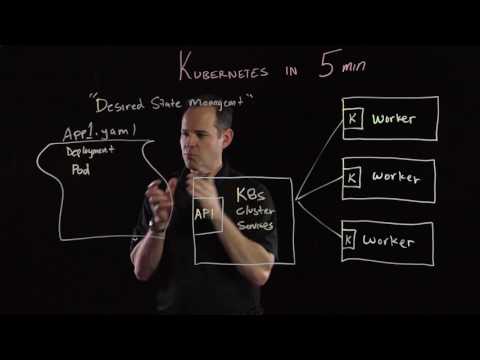
Kubernetes Basics

Kubernetes for Beginners
Common questions about Kubernetes:
Kubernetes is used for automating deployment, scaling, and management of containerized applications in clusters of hosts, simplifying complex container orchestration.
Kubernetes is an open-source project and free to use. However, managed Kubernetes services by cloud providers incur costs.
Yes, Kubernetes is cloud-agnostic and can run on public clouds, private data centers, or hybrid environments.
Knowledge of containerization, Linux, networking, and DevOps best practices are important to effectively manage Kubernetes.
Kubernetes uses self-healing, automated restarts, replication, and load balancing to ensure high availability of applications.
Partners listed for Kubernetes and trusted teams available for implementation support.
Want to implement Kubernetes for clients?
Create a partner owner account, build your partner profile, then apply to be featured here.
Own a product? Create your profile and get reviewed for listing on The Software Showroom.


